
Self-Inking vs Traditional Rubber Stamps: Which Should Your Business Choose?
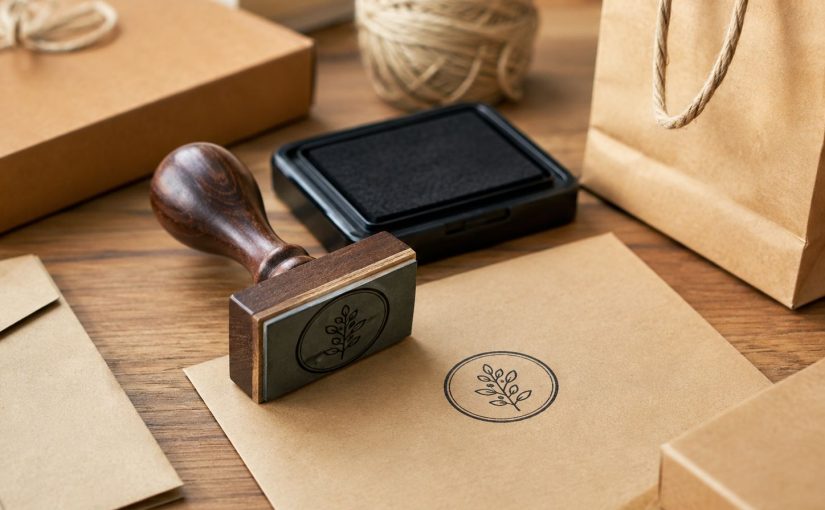
If your business uses stamps regularly, one of the first decisions you will face is whether to choose a self-inking stamp or a traditional rubber stamp.
At first glance, both seem to do exactly the same job. They place your company details, approval message, logo or other information onto a document. The real difference becomes noticeable when you start using the stamp every day.
A business processing invoices throughout the day may value speed and convenience. A small company stamping packaging occasionally may care more about flexibility and appearance.
Understanding how each type works makes it easier to choose the stamp that fits the way your business actually operates.
DC Labels supplies professional rubber stamps in South Africa for companies that need practical solutions for administration, documents, packaging and everyday business use.
What Is a Self-Inking Stamp?
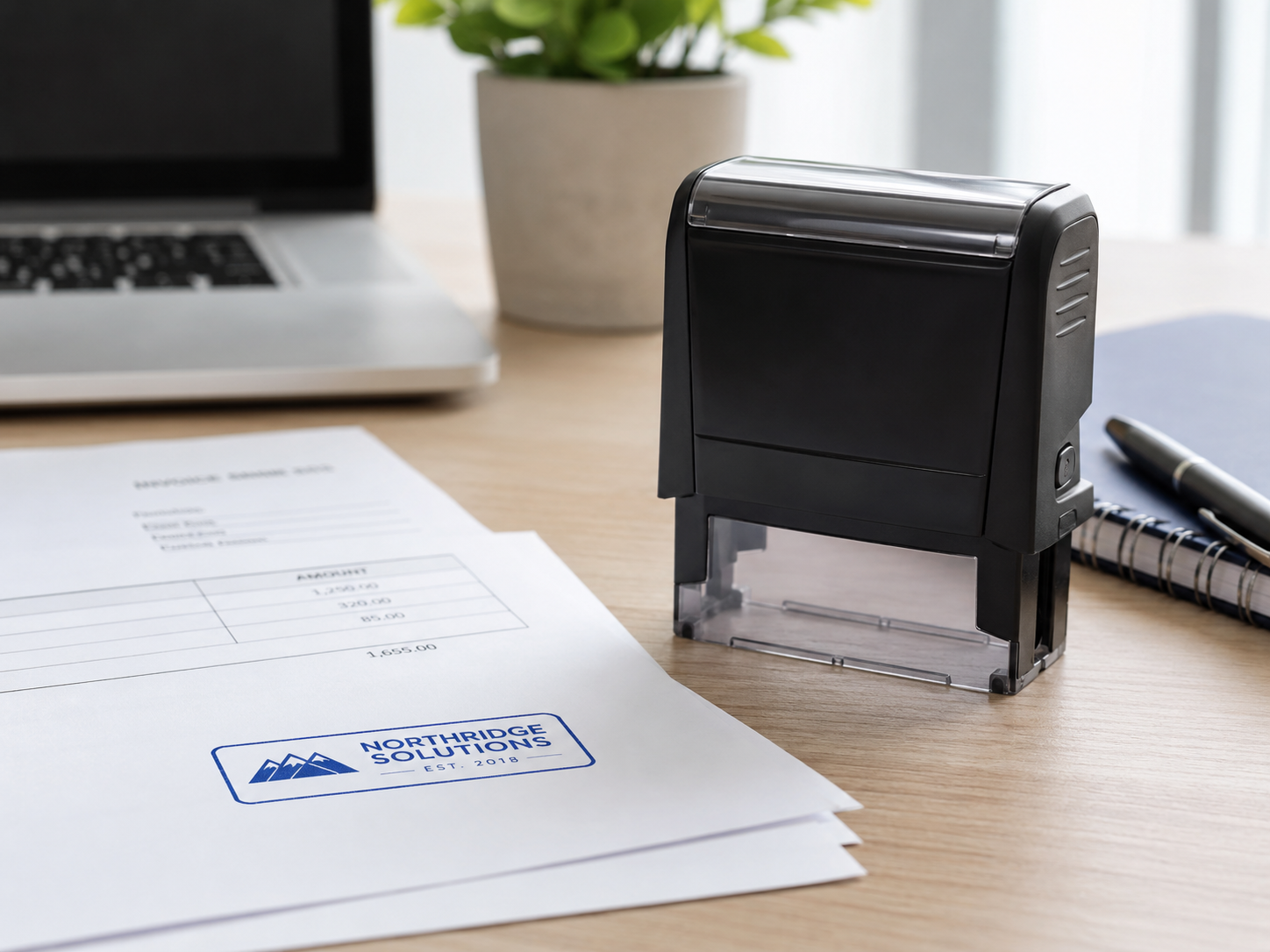
A self-inking stamp contains an internal ink pad inside the stamp mechanism.
Each time you press the stamp down, the rubber impression makes contact with the ink pad before transferring the design onto the paper. When you release it, the mechanism returns to its normal position.
This means you do not need a separate ink pad sitting on your desk.
That small difference can make self-inking stamps much more convenient for people who stamp documents repeatedly throughout the day.
They are commonly used for company information, dates, approvals, received documents, paid invoices and other routine office processes.
What Is a Traditional Rubber Stamp?
A traditional rubber stamp normally consists of a rubber impression attached to a handle or mounting block.
Unlike a self-inking model, it does not contain its own ink supply. You press the stamp onto a separate ink pad before applying it to the document.
Traditional stamps are simple, familiar and versatile.
They can work particularly well when a business only stamps occasionally or wants greater flexibility with different ink colours or specialised applications.
Which Type Is Faster to Use?
If your staff needs to stamp a large number of documents, self-inking is usually the more convenient option.
Consider a reception desk that receives dozens of documents every day.
With a traditional stamp, the process is:
Press into ink pad.
Stamp document.
Return to ink pad.
Repeat.
With a self-inking model, the user simply presses the stamp.
That difference may seem small, but over repeated use it can make administrative work smoother.
For accountants, receptionists, warehouses, schools, medical practices and other busy environments, convenience is often the strongest reason to choose self-inking.
Which Is Better for Occasional Business Use?
If you only need to stamp a few documents each week, a traditional stamp may be perfectly suitable.
A small business owner who uses a logo stamp on packaging twice a week may not need the speed of a self-inking model.
The traditional option can also be useful when the stamp is part of a more manual or creative process.
For example, a handmade-product business may use a rubber stamp on kraft packaging, cards or paper bags because the slightly handcrafted appearance suits the brand.
So the question is not simply, “Which stamp is better?”
A better question is:
How often will I actually use it?
Which Stamp Is Cleaner to Use?
Self-inking stamps generally provide a tidier desktop experience because the ink pad is contained inside the unit.
There is less need to handle an exposed ink pad every time you stamp something.
For an office where multiple employees share the same stamp, this can be especially convenient.
Traditional stamps require a separate pad, which means there is more opportunity for ink to get onto fingers, desks or surrounding paperwork if the pad is not handled carefully.
For neat administrative environments, self-inking often has the advantage.
Which Gives a More Consistent Impression?
A self-inking mechanism helps apply ink to the rubber surface in a similar way with each use.
That can make it easier to achieve consistent impressions during repetitive stamping.
Traditional stamps depend more on how the user inks and presses the stamp. Too much ink, too little ink or uneven pressure may affect the impression.
This does not mean traditional stamps produce poor results. With proper use, they can produce excellent impressions.
The difference is that self-inking models remove some of the variation from the process.
Which Is Better for a Company Details Stamp?
For company information used repeatedly on documents, self-inking is often the practical choice.
Imagine a stamp containing:
MABENA PROJECTS (PTY) LTD
Reg. No. 2026/123456/07
Tel: 011 555 7820
If accounts or administration staff use that stamp dozens of times every week, having the ink built into the mechanism makes sense.
A traditional stamp could still perform the same job, but there would be little benefit in using a separate ink pad unless the business had another reason for choosing that format.
What About PAID, RECEIVED and APPROVED Stamps?
These are ideal examples of stamps that may be used repeatedly throughout the working day.
An accounts department could use:
PAID
Date: __________
A reception desk might need:
RECEIVED
Date: __________
A manager may use:
APPROVED
Signature: __________
Date: __________
For repetitive administrative tasks like these, self-inking models can save small amounts of effort every time the stamp is used.
Over hundreds of documents, those small efficiencies add up.
Which Stamp Is Better for Packaging?
This is where traditional rubber stamps can become especially attractive.
Some businesses use stamps to brand:
- Kraft boxes
- Paper bags
- Envelopes
- Thank-you cards
- Tags
- Wrapping paper
Traditional stamps can work well for this because the user can control the ink pad and choose an appropriate ink for the intended material.
A bakery, handmade-product business, online shop or small clothing brand may prefer this approach when it wants packaging to feel personal rather than mechanically printed.
For businesses that want full-colour designs or consistent branding across larger quantities of packaging, professionally printed custom stickers may be a better complement to the stamp.
Can You Change Ink Colours?
Traditional stamps provide a simple advantage here because you can use the same stamp with different compatible ink pads.
For example, the same logo could potentially be stamped in black for normal packaging and another colour for a special campaign, depending on the ink and surface being used.
Self-inking stamps normally contain their own ink pad, so changing colours is less convenient.
If colour flexibility matters more than speed, a traditional stamp may therefore suit your business better.
Which One Is Better for a Logo?
Both types can be personalised with a business logo.
The better option depends on how you intend to use it.
A self-inking logo stamp works well for repeated impressions on office documents, loyalty cards or other suitable paperwork.
A traditional logo stamp may be preferable when the business wants to use the same design across different packaging materials or experiment with different ink colours.
Very detailed logos can be difficult to reproduce clearly at small sizes, regardless of the stamp type.
For the cleanest result, logos often need to be simplified so fine lines and tiny text do not disappear in the impression.
What Size Stamp Should You Choose?
Do not choose the smallest stamp simply because it costs less or takes up less desk space.
The stamp needs enough room for the information to remain readable.
A short message such as:
PAID
can use a compact format.
A company stamp containing a logo, business name, registration number, telephone number and website requires more space.
Trying to squeeze too much information into a small stamp often creates an impression that looks crowded and difficult to read.
The amount of information should determine the stamp size.
Does a Self-Inking Stamp Need Maintenance?
Yes, although it is generally straightforward.
Over time, the internal ink pad will eventually need to be re-inked or replaced, depending on the model and how heavily it is used.
The rubber impression should also be kept reasonably clean so dried ink, dust or paper fibres do not interfere with the print.
A traditional stamp also requires basic care.
The stamp face should be cleaned when necessary, and the separate ink pad needs to be replaced or re-inked when it begins producing weak impressions.
Neither option is maintenance-free, but both are simple to manage when used correctly.
Which Is Better for Staff Sharing One Stamp?
A self-inking model is usually more convenient when several employees use the same stamp.
There is only one unit to keep track of rather than a stamp plus a separate ink pad.
This can be helpful in reception areas, administration offices and shared accounts departments.
Traditional stamps are still perfectly usable in shared environments, but the ink pad needs to remain nearby and properly closed when not in use.
What If I Need Different Types of Business Stamps?
Many businesses eventually discover that one stamp is not enough.
Instead of trying to create a single oversized stamp for every task, different stamps can serve different purposes.
You might have a self-inking company-details stamp for daily documents, a PAID stamp for accounts and a traditional logo stamp for packaging.
This approach is often more practical because each stamp has one clear function.
Businesses also sometimes combine office stamps with custom magnets for promotional purposes, allowing the stamp to handle administration while the magnet handles customer-facing advertising.
Are Self-Inking Stamps More Professional?
Not automatically.
Professionalism comes more from the quality of the design and the impression than from the mechanism.
A poorly designed self-inking stamp can look less professional than a clean traditional stamp.
What matters is that:
The text is readable.
The information is correct.
The stamp is appropriate for its purpose.
The impression is clear.
For a corporate office, however, self-inking stamps often feel more convenient and organised because everything is contained in one unit.
Which Stamp Is Better for a Small Business?
It depends on the business.
A consultant stamping occasional documents may be completely satisfied with a traditional stamp.
An online store branding paper packaging might also prefer traditional.
A busy accounting company processing paperwork all day will probably appreciate self-inking.
A restaurant, school or medical practice using RECEIVED or PAID stamps repeatedly may also find self-inking more efficient.
Instead of choosing based only on price, think about what your staff will be doing with the stamp every day.
Self-Inking or Traditional: A Simple Way to Decide
Ask yourself three questions.
How often will I use the stamp?
Frequent use usually favours self-inking.
Do I need flexibility with inks or packaging?
Traditional may offer more flexibility.
Is speed or creative control more important?
Choose self-inking for speed and convenience. Choose traditional when you value a simpler manual format and greater control over the ink pad.
That will usually point you toward the right option without making the decision complicated.
Can a Business Use Both?
Absolutely.
In fact, this may be the smartest approach for some companies.
A business could use a self-inking stamp for documents and a traditional logo stamp for packaging.
For example, an online retailer could use:
A self-inking stamp for invoices and returns paperwork.
A traditional stamp for kraft packaging.
Printed stickers for product branding.
A branded mat at the entrance to its physical premises.
Each product solves a different branding or administrative problem rather than forcing one solution to do everything.
So, Which Rubber Stamp Should Your Business Choose?
Choose a self-inking stamp when your priority is speed, convenience and repetitive office use.
Choose a traditional rubber stamp when you stamp occasionally, want more control over ink choices or plan to use the stamp creatively on suitable packaging and paper products.
Neither option is universally better.
The best choice is the one that fits your actual workflow.
If your team stamps documents every hour, convenience matters. If you stamp packaging twice a week, flexibility may matter more.
DC Labels can help businesses choose and personalise stamps for company details, approvals, administrative processes, branding and other everyday applications.
A good stamp should make your work easier, not create another thing you have to manage.
Frequently Asked Questions
Are self-inking stamps good for daily office use?
Yes. Their built-in ink pad makes them particularly convenient for businesses that repeatedly stamp invoices, forms, receipts or administrative documents.
Can traditional rubber stamps be personalised?
Yes. They can be created with company names, logos, contact details, short messages or other designs suited to the available stamp size.
Can I use a self-inking stamp for my company registration details?
Yes. Company names and registration details are common uses for business stamps.
Which stamp is better for packaging?
Traditional rubber stamps can be useful for paper bags, kraft boxes, envelopes and other suitable packaging where a handcrafted look is desired.
Is a self-inking stamp better than a normal rubber stamp?
Not in every situation. It is usually more convenient for frequent use, while traditional stamps can offer more flexibility for occasional, creative or packaging applications.